
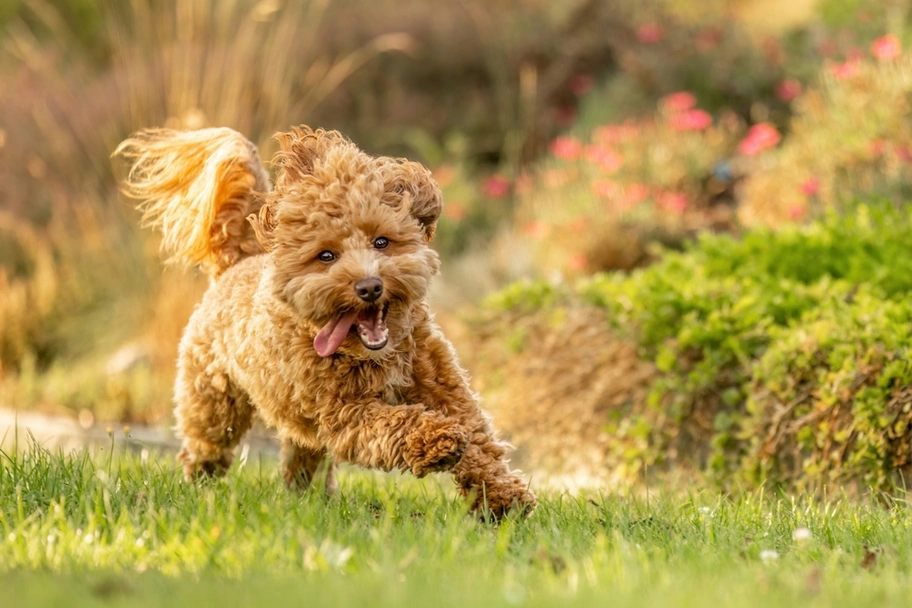
Havapoo Breed Guide: The Havanese Poodle Mix, Explained
Havapoo Overview
- What it is: A cross between a Havanese and a Toy or Miniature Poodle, also sold as a Poovanese or Havadoodle.
- Size: Most stand 8 to 15 inches tall and weigh 7 to 20 pounds, depending on which size of Poodle was used.
- Temperament: Affectionate, people-focused, quick to learn, and happiest when someone’s home.
- Lifespan: 12 to 16 years. Both parent breeds are long-lived small dogs.
- Coat: Low-shedding but high-maintenance. Brushing several times a week plus a professional groom every four to six weeks.
- Best fit for: Condo and apartment living, families with school-age kids, first-time owners, and allergy-sensitive households, with one honest caveat: no dog breed is truly hypoallergenic.
Table of Contents
What Is a Havapoo?
A Havapoo is a first-generation cross between a purebred Havanese and a purebred Toy or Miniature Poodle. It’s a hybrid, not a breed, which means no kennel club recognizes it and no written standard controls how one turns out.
Where the parent breeds come from
The Havanese is the only dog breed native to Cuba and the country’s national dog. It descends from small bichon-type dogs carried from the Canary Islands on Spanish sailing ships in the 1500s and 1600s, which became the now-extinct Blanquito de la Habana, the “little white dog of Havana.” The Havanese Club of America notes those dogs were later crossed with Maltese and Poodle, which is where the breed’s enormous colour range came from. So there’s already Poodle in the Havanese family tree. After 1959, Dorothy and Bert Goodale rebuilt the breed in the United States from the handful of dogs that left Cuba, and the AKC moved it into the Toy Group in 1999.
The Poodle is a German water dog, not a French one. Its name comes from pudeln, German for splashing in water, and the show trim began as a working clip for swimming. The Standard came first, and 18th-century breeders bred it down into the Miniature and Toy varieties as companions for European city dwellers.
Why the Havapoo exists
The Havapoo turned up in the United States in the 1990s and 2000s, part of a wave of Poodle crosses that started with one dog. In 1989, Wally Conron of Guide Dogs Victoria in Australia crossed a Labrador with a Standard Poodle to produce a guide dog for a blind woman whose husband was allergic to dog hair. The Labradoodle was born, and the designer-dog market followed.
Conron has been blunt about what came next. “I opened a Pandora’s box and released a Frankenstein’s monster,” he told ABC News in 2019, describing his worry that breeders chased the trend for profit rather than health. That’s the honest context for any Poodle cross. The cross itself isn’t the problem. Who’s doing the breeding is.
What Does a Havapoo Look Like?
Havapoos are small dogs, generally 8 to 15 inches tall at the shoulder and 7 to 20 pounds, though some reach 30. The Poodle parent drives most of that range.
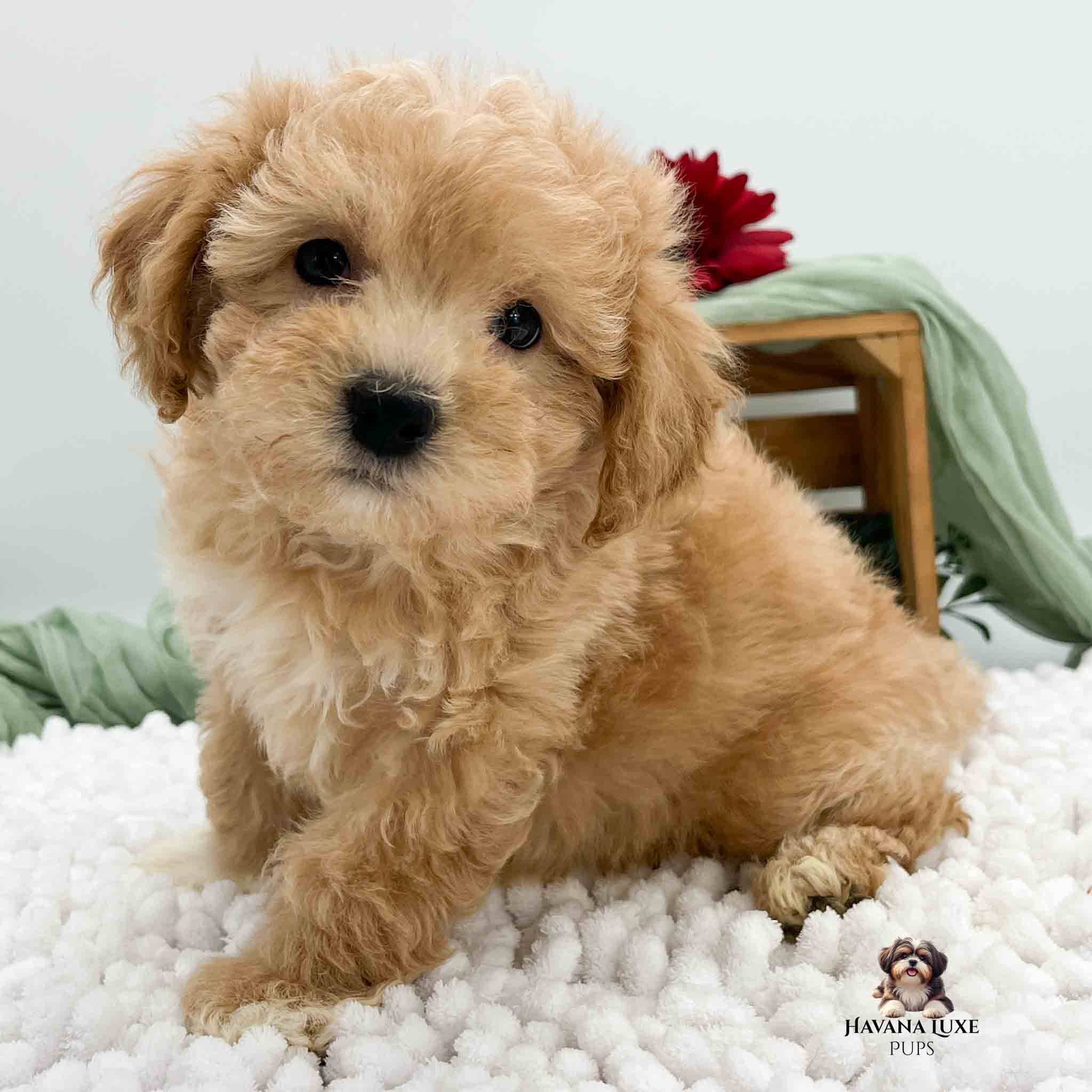
Photo credit: Havana Luxe Pups
How big do Havapoos get?
The size gap comes down to arithmetic. The AKC standard puts the Havanese at 8.5 to 11.5 inches and roughly 7 to 13 pounds. A Toy Poodle is 10 inches or under and often just 4 to 6 pounds, while a Miniature stands over 10 inches and up to 15. Cross a Havanese with a Toy and you’ll land at the tiny end. Cross with a Miniature and you’ll get a bigger, leggier dog. Ask which variety was used before you assume anything about adult weight.
What kind of coat and colour does a Havapoo have?
Coats vary more than most people expect. The Havanese carries a long, soft, silky double coat that’s wavy and abundant, and the Poodle carries a dense, curly, harsh-textured one. A Havapoo can land anywhere between the two, and littermates often differ. Colour is wide open, since the Havanese standard permits every colour and pattern equally: cream, apricot, red, chocolate, black, silver, sable, parti-colour, and phantom all show up.
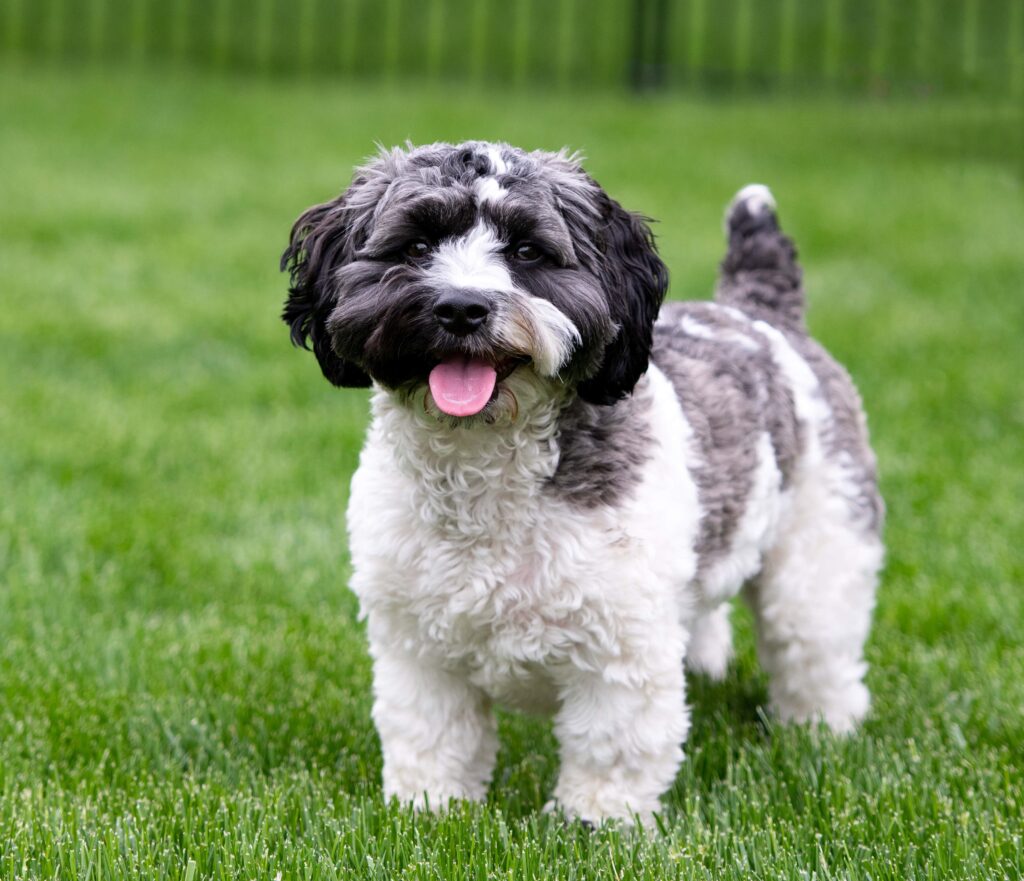
Photo credit: Havana Luxe Pups
How long do Havapoos live?
Expect a compact, sturdy dog with a rounded head, dark eyes, drop ears, and the Havanese’s springy gait. Hill’s puts the Havanese at 10 to 15 years and PetMD puts the Toy Poodle at 10 to 18, so most Havapoos live 12 to 16 years.
What Is a Havapoo’s Temperament Like?
Havapoos are social, affectionate, and eager to be part of whatever you’re doing. Both parent breeds were built to be companions, and it shows.
What does the breed standard say about temperament?
The AKC breed standard describes the Havanese as “friendly, playful, alert and intelligent with a sweet, nonquarrelsome disposition.” The Poodle standard calls for a dog that’s “very active, intelligent,” and flags shyness or sharpness as a serious fault. Together you get a small dog that’s generally confident with people, quick on the uptake, and not inclined to pick fights.
Are Havapoos vocal?
They’re chatty and observant, and proud of it. Havapoos tend to announce visitors, which is useful in a condo hallway and less useful at 6am. That’s a training project, not a personality flaw.
Does every Havapoo turn out the same?
No. Traits don’t blend predictably in a first-generation cross. One puppy might inherit the Havanese’s easygoing silliness and its littermate the Poodle’s higher drive. Meet the parents if you can.
Is a Havapoo Right for You?
A Havapoo suits someone with a small home, a flexible schedule, and time for daily grooming and training. It’s a poor match for a household that’s empty ten hours a day.
Is a Havapoo a good fit for condo or apartment living?
Condos and apartments work well. Hill’s notes the Havanese suits people who want a small, active dog that doesn’t need a big yard and is content with frequent walks and games of fetch. That’s why Vancouver’s condo neighbourhoods are full of them.
Is a Havapoo right for a first-time owner?
First-time owners generally do fine here, since these dogs are biddable, food-motivated, and forgiving of a beginner’s timing. They’re small but not sedentary: Hill’s recommends 20 to 40 minutes a day for the Havanese, and the Poodle side adds a real need for mental work. A Havapoo that gets only a potty break and a couch starts barking at the elevator.
What if your household is out most of the day?
Here’s the honest caveat. Hill’s is direct that Havanese “do not do well left alone for long periods” and “prefer being with their owners.” If your household is out the door by 7am and back at 6pm, a Havapoo needs a plan: a midday walker, a neighbour, or daycare. That’s a reason to sort the logistics before the puppy comes home, not a reason to skip the breed.
How Do You Groom, Exercise and Feed a Havapoo?
Havapoo care comes down to three standing commitments: frequent brushing, a professional groom every four to six weeks, and daily physical plus mental exercise.

Photo credit: Happy Spa Dogs
How much grooming does a Havapoo need?
More than most owners expect going in. Hill’s recommends brushing and combing a Havanese three or more times a week to keep the coat mat-free, and PetMD recommends daily brushing plus professional grooming every four to six weeks for a Toy Poodle’s continuously growing coat. A Havapoo needs the harder of the two. Use a proper slicker brush and a metal comb, and comb down to the skin rather than skimming the top. Behind the ears, under the collar, and in the armpits is where mats start.
What about bathing, ears, nails and teeth?
A bath every two to four weeks with a gentle dog shampoo is reasonable. Drop ears need checking and drying regularly, since trapped moisture is how ear infections start, and nails need trimming every three to four weeks. Brush their teeth too. Dental disease is a real risk in small breeds.
How much exercise and what kind of food does a Havapoo need?
Exercise should total roughly 30 to 60 minutes a day for an adult, split between walks and play, with mental work on top. Scent games, puzzle feeders, and short training sessions tire a Poodle-cross brain faster than another lap of the block. Feed a complete small-breed formula and measure the portions, because a dog this size gains weight on few extra calories, and that weight lands on knees and hips that are already a watch point in both parent breeds.
What Health Problems Are Common in Havapoos?
Havapoos inherit the health risks of both parent breeds, and the areas to watch are the ones the Havanese and Poodle share: knees, eyes, hips, hearts, and teeth.
What health conditions run in the parent breeds?
The Havanese Club of America documents cataracts, cherry eye, retinal atrophy, congenital deafness, hip dysplasia, patellar luxation, Legg-Calvé-Perthes disease, chondrodysplasia, heart disease, thyroid disorders, and sebaceous adenitis. The Poodle Club of America identifies progressive retinal atrophy, patellar luxation, idiopathic epilepsy, Addison’s disease, von Willebrand’s disease, and hip dysplasia in Miniatures. PetMD adds ear infections, dental disease, and tracheal collapse as common in Toy Poodles.
Does crossbreeding lower the health risk?
Not for the conditions both parents share. Patellar luxation, eye disease, and dental disease appear on both lists, so crossing the two breeds doesn’t reduce the risk of them. That’s worth saying plainly, because “hybrid vigour” gets used as a sales line. A UC Davis study published in the Journal of the American Veterinary Medical Association in 2013 reviewed more than 90,000 dogs and 27,254 diagnosed genetic disorders. Ten conditions were more common in purebreds, one in mixed breeds, and thirteen occurred at the same rate in both, including hip dysplasia, cataracts, epilepsy, cancers, and bloat. A mixed-breed puppy is not automatically a healthier puppy.
What health testing should the parents have?
What protects you is health testing on the parents. For the Havanese, ask for OFA hip and patella evaluations plus a current CAER eye exam, the three tests required for CHIC certification. For the Poodle, ask for the prcd-PRA DNA test, a current eye exam, and a patella or hip evaluation. A breeder who can’t produce those results isn’t one you want.
How Do You Train and Socialize a Havapoo?
Start training and socialization the week your Havapoo comes home, and build alone-time tolerance deliberately from day one. These dogs learn fast, which cuts both ways.
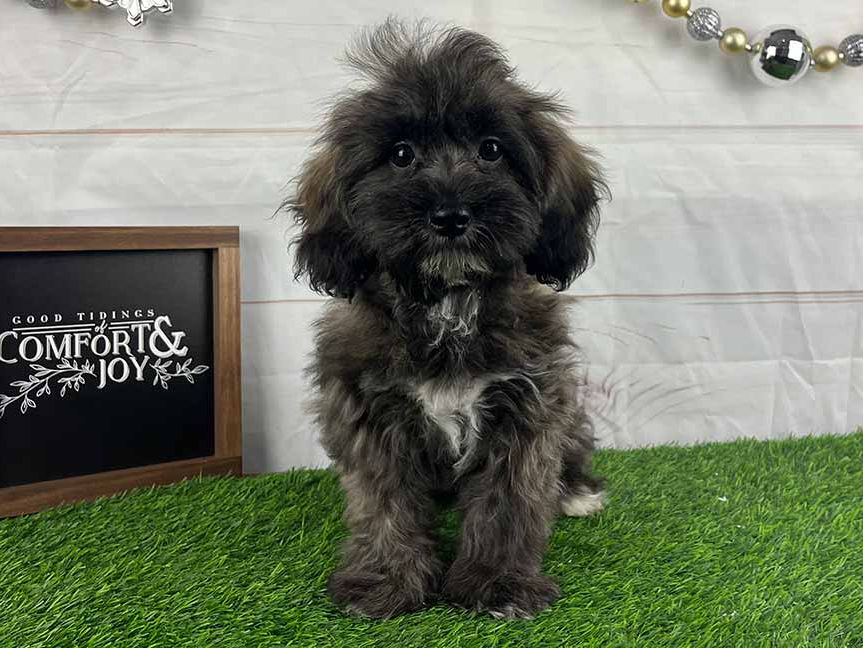
Photo credit: Havana Luxe Pups
When should you start socializing a Havapoo?
The Canadian Veterinary Medical Association is unambiguous about timing: the critical window for socialization falls before three to four months of age, and problematic behaviour is a leading cause of relinquishment and euthanasia in otherwise healthy dogs. Positive, controlled exposure should start before a puppy is fully vaccinated, once they’ve had their first round of shots and deworming. Talk to your vet about what that looks like for your puppy, and check the vaccination requirements of any facility before booking.
What training approach works best?
Use positive reinforcement. Havapoos are sensitive and food-motivated, and harsh corrections shut them down rather than teaching them anything. Five minutes a few times a day beats one long slog.
How do you prevent separation anxiety?
Teach a quiet cue early, because alert little dogs bark and it’s far easier to shape that at 12 weeks than at three years. And practise being alone: leave the room, come back, stretch the gap, and pair your departures with something good so they stop predicting distress. The AKC lists pacing, whining, trembling, excessive barking, destruction, and house-soiling as signs of separation anxiety, and notes clingy dogs are most at risk.
Does socialization ever stop mattering?
No. It’s ongoing exposure to other dogs, people, and places with someone competent supervising, not a puppy-class checkbox. That’s where structured daycare earns its place: playgroups matched by size, energy, and temperament give a small social dog regular practice reading other dogs, with humans who step in before things get tense.
Havapoo FAQ
Are Havapoos hypoallergenic?
No. The AKC states plainly that no breed or mix is truly hypoallergenic. The main dog allergen, Can f 1, lives in dander and saliva as well as hair, and a 2012 study found low-shedding Poodles carried some of the highest Can f 1 levels in coat samples while Labradors carried significantly lower ones. A low-shedding coat means less hair on the sofa, which helps some allergy sufferers, but it isn’t a guarantee.
How big do Havapoos get?
Most finish between 8 and 15 inches tall and 7 to 20 pounds, with some reaching 30. The Poodle parent is the deciding factor: a Toy Poodle cross stays at the small end, a Miniature Poodle cross runs bigger. Ask the breeder which variety was used and what both parents weigh.
Do Havapoos have separation anxiety?
They’re at higher risk than average, because both parent breeds were bred as close companions. Hill’s states directly that Havanese don’t do well left alone for long periods and prefer being with their owners. Alone-time tolerance is trainable with short, gradual absences started early, and a midday walk or a daycare day breaks up a long stretch on their own.
Are Havapoos good with kids?
Yes, with supervision and sensible rules. The Havanese standard describes a sweet, nonquarrelsome disposition, and Havapoos are typically patient and playful with school-age children. Because they’re small, the real risk is injury from being dropped or stepped on, so toddlers need a lesson in gentle hands.
How much grooming does a Havapoo need?
A lot. Brush and comb at least three times a week, more if the coat is curly, and book a professional groom every four to six weeks. Add ear checks, nail trims, and regular tooth brushing. If the grooming time or budget isn’t there, this isn’t the right dog.
How long do Havapoos live?
Typically 12 to 16 years. Hill’s puts the Havanese at 10 to 15 years and PetMD puts the Toy Poodle at 10 to 18. Keeping your Havapoo lean, dentally healthy, and current on vet checks moves them toward the top of that range.
The Bottom Line on Havapoos
A Havapoo is a bright, affectionate, city-friendly little dog with a coat that asks a lot of you and a temperament that asks for your time. Choose the breeder carefully, keep the grooming routine honest, and build alone-time tolerance early. That kind of care is exactly what shapes our purpose and values as a pet care provider.
Socialization is the piece owners most often leave until it’s already a problem. If you’re in Vancouver and sorting out the logistics, our dog daycare is worth a look: playgroups matched by size and temperament, crate-free private suites for downtime, and live pet cams. Learn More About Dog Daycare.